
A form behind the code
Build the form, put it behind a code or a short link, and read the submissions in your account. No embed, no separate service, no wondering where the data went.
Built and hosted here
Fields, labels, required flags and a thank-you message. The page renders on a phone without a framework, which matters because a lead-capture form is almost always opened on a phone, standing up, on a stranger's network.
The submissions are yours
They sit in your account, exportable as CSV or Excel. Nothing is shared with anybody, and the form does not load a third-party script that would be doing its own collecting alongside yours.
Attributed to the code that produced it
Because the form sits behind a code, a submission carries the scan that led to it — so "which sign produced leads" is a report rather than a guess.
They land in one list, not four
Every submission and every card exchange becomes a contact in one shared list, matched on email address so the same person filling in two forms is one entry rather than two. Import the list you already have as CSV; take it away as CSV whenever you like.
See it happen
What it looks like
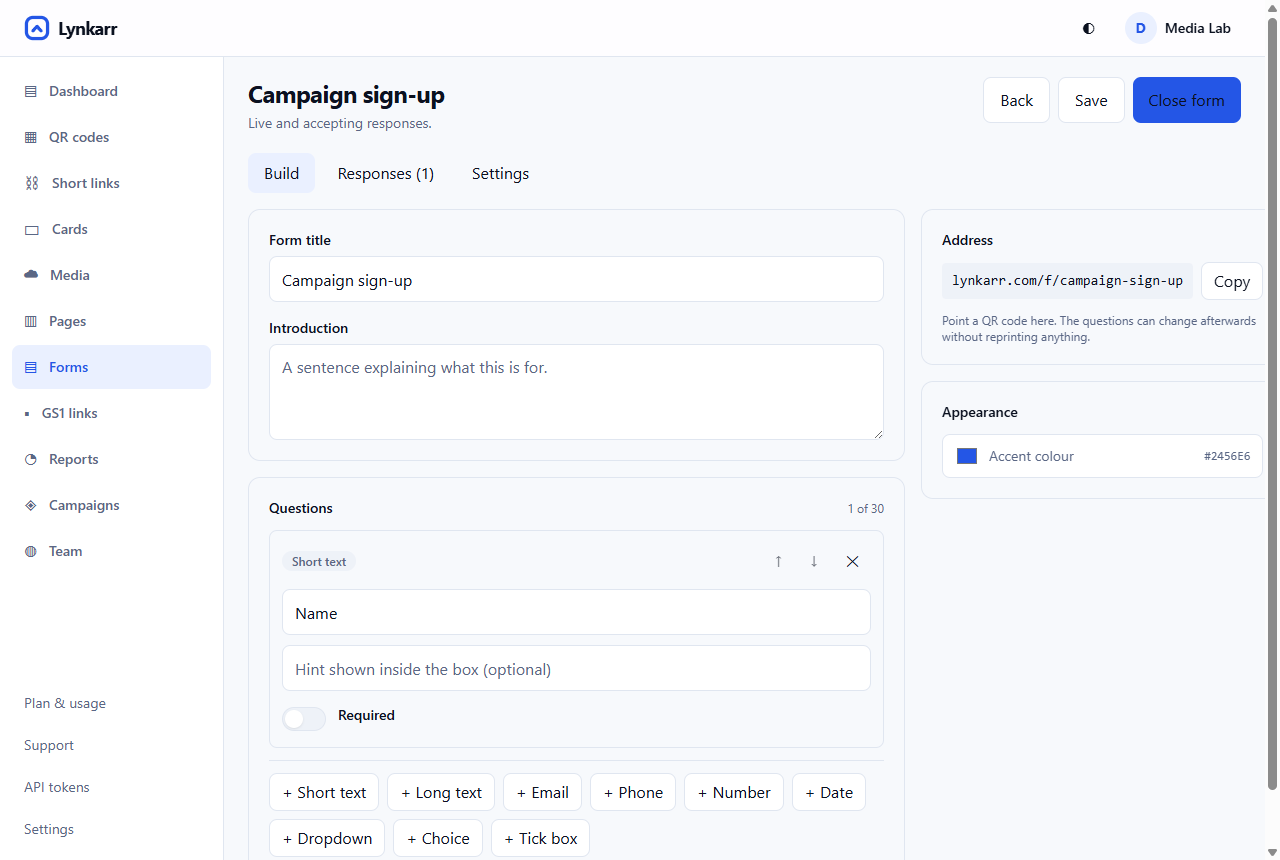 1Questions, reordered by dragging2Nine field types3Exactly what the person answering will see
- Questions, reordered by dragging
- Nine field types
- Exactly what the person answering will see
What you can do with it
Built and hosted here, not embedded from elsewhere
Fields, labels, required flags and a thank-you message. The page renders on a phone without a framework, which matters because a lead form is almost always opened standing up, on a stranger's network, with one hand.
The submissions are yours and nobody else's
They sit in your account, exportable as CSV or Excel. We put nothing on the page that collects for anybody else — the only third-party tag a form can carry is one you added yourself.
Attributed to the code that produced it
Because the form sits behind a code, a submission carries the scan that led to it. "Which sign produced leads" is a report rather than a guess.
One contact list, deduplicated on the way in
Form submissions and card exchanges land in the same list, matched on email address. Where two entries disagree the first answer is kept and the second is recorded beside it, so an import can never quietly overwrite something a person typed.
Getting there
-
Build the form
Only the fields you will actually use. Every extra one costs you answers.
-
Put it behind a code or a link
Or both — they can point at the same form.
-
Print it, or send it
A stand, a badge, a closing slide, an email.
-
Export when you need it
CSV or Excel, or read it in the app.
More in the same place
How to do it
Questions
Where do the answers go?
Into your account, and nowhere else. There is no integration quietly copying them somewhere.
Can I be notified when somebody submits?
Yes. Put an address in the form's settings and every response is emailed to it as it arrives, with the answers laid out and a link to the rest. Leave it empty and nothing is sent — the response is stored either way.
Is it GDPR-friendly?
The form stores what you ask for and nothing else, and the page sets nothing on the visitor's device. Whether your particular use needs a notice or a lawful basis is a judgement about your purpose, and that one is yours.
Try it with one code
The free plan has no expiry and asks for no card, and the analytics behind it are the same ones a paying customer gets.
Free forever for one person. No card, and 10,000 scans a month included.